


Crypto Community Management vs Growth: Which Work Do You Need?
A team may need help answering its existing community, attracting suitable new members, or both. Write those jobs separately before hiring. Otherwise the person handling support can end up responsible for a growth target without the resources or authority to influence it.
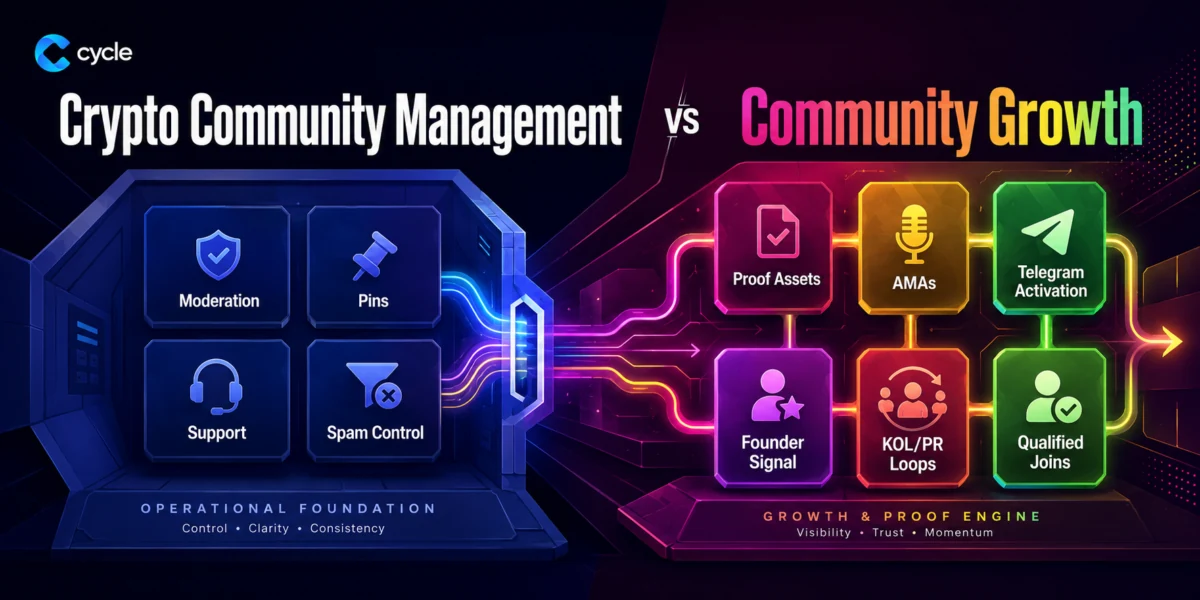
In this guide, community management means operating the existing space: moderation, official information, response routing and escalation. Growth work means introducing relevant people to the project and helping them reach an available next step. These are working definitions for a brief, not universal job titles.
Start with the problem you can observe
| Observed problem | Work to investigate first | What to check afterward |
|---|---|---|
| Members cannot find current official links. | Management: update and organise the information. | A newcomer reaches the right resource. |
| Questions wait because no one owns the answer. | Management: assign response and escalation owners. | The answer reaches the person asking, with its status clear. |
| New members arrive but cannot use the product. | Product and onboarding: test the actual first task. | Identify where access or instructions fail. |
| The space works, but few relevant people find it. | Growth: test a specific topic, channel or partner. | Observe who arrives and which task they attempt. |
| An event attracts questions but no follow-up is published. | Assign editorial follow-up before scheduling another event. | Answers and resources are accessible after the event. |
Those observations require different remedies. More announcements will not supply a missing product answer. Extra moderation hours alone do not define a reason for a new audience to join.
Connect the invitation to onboarding
Take one actual invitation or draft post. Identify the audience, the promised value and the destination. When someone follows it, can they recognise the same topic, find the official resource and ask a relevant question? Test that route yourself before assigning a growth forecast.
A joint event can give the invitation a concrete subject. X Spaces supports live audio conversations; the event still needs a host, a topic and a follow-up owner. Use the partner AMA brief and choose partners for audience and topic fit.
Put responsibilities in the brief
For management, specify channels, languages, coverage, escalation, what can be answered and what must go to another owner. For growth, specify the audience, material, partner or channel, destination and measurement. Name any dependency on the product team.
Do not assume that an engagement or AMA project includes continuous moderation. Coverage and responsibilities need an explicit agreement. This guide does not claim that CYCLE provides 24/7 community support.
Review activity and useful outcomes separately
For management, inspect unresolved questions, incorrect links and the quality of answers. For growth, inspect the source of new arrivals, their relevant questions and any known next actions. A member count alone cannot tell you which of those jobs was done.
Keep original metric names and observation windows. Do not call a contact-link click a received enquiry. Use the measurement worksheet and report unknown attribution without guessing.
Exclude purchased replies and artificial metric inflation; X describes these restrictions in its authenticity policy. The purpose of a community brief is to support useful participation, not to manufacture the appearance of demand.
Choose the next piece of work
If information or support is failing, resolve that with the responsible team. If the next task is X content, engagement, relevant partnerships or AMAs before promotion, review CYCLE's pre-marketing offer. Bring the actual channel and the problem you observed so the conversation can start with a specific scope.