


Reputation-sensitive proof work across branded search, review platforms, Reddit, YouTube, X, LinkedIn, and public trust surfaces.
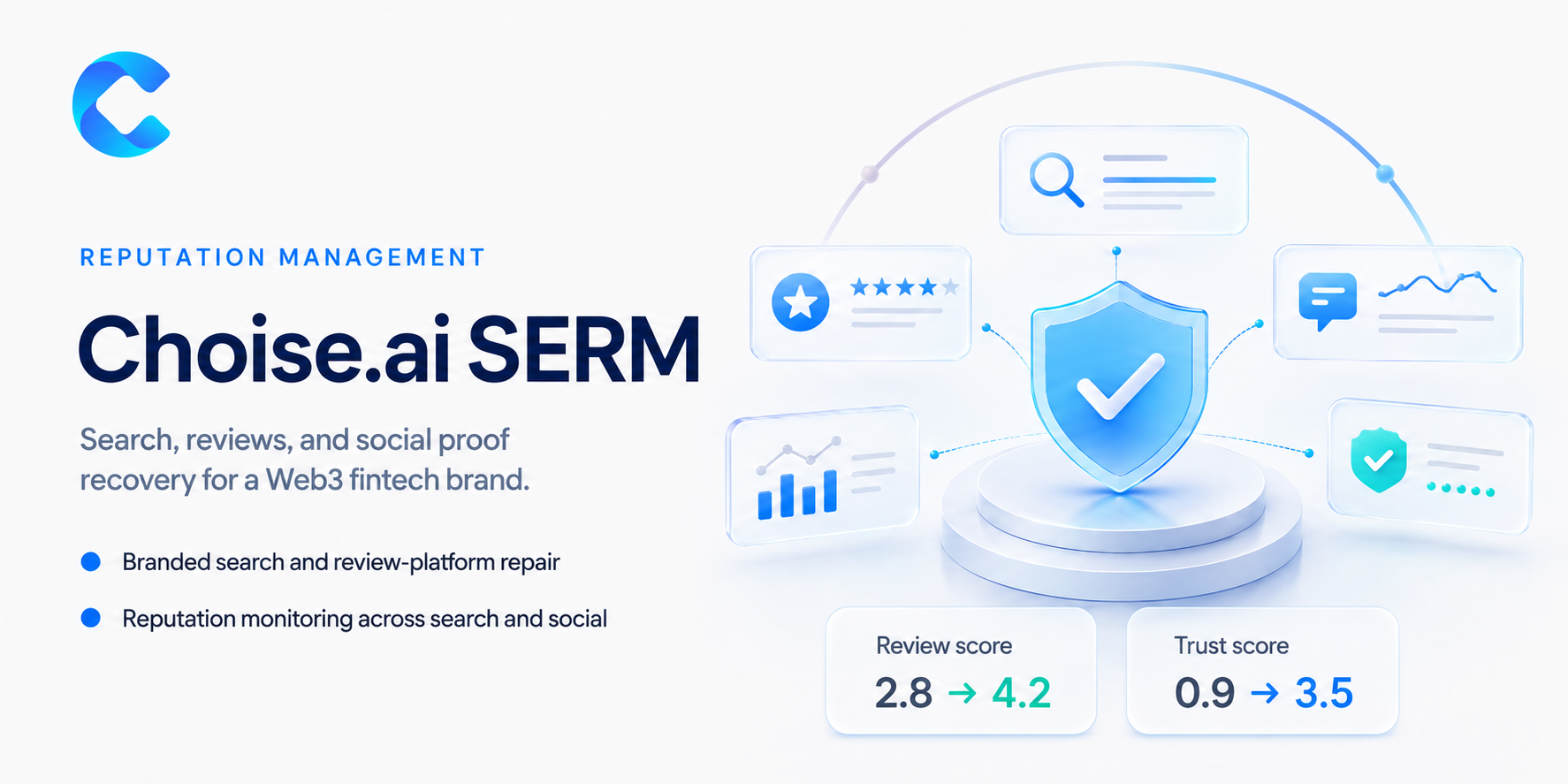
Choise.ai is a SERM and reputation-repair proof case for CYCLE: a crypto/Web3 fintech brand with reputation risk across branded search, review platforms, social channels, Reddit, YouTube, Google, and Yandex.
Search reputation is not just a PR problem. For a crypto or Web3 finance brand, reputation affects every commercial surface: investor checks, user trust, partner diligence, KOL conversion, paid traffic conversion, and support pressure.
This case shows how CYCLE structures reputation work as an operating system: map the public surface, identify risk assets, improve review-platform signals, build stronger neutral and positive assets, and keep weekly score movement visible.
Proof Case Snapshot
- What was unclear Branded search and public reputation surfaces created inspection risk.
- Proof layer built Search cleanup, review-platform repair, social surface monitoring, and reputation map.
- Distribution activated SERM work across Google, Yandex, Reddit, YouTube, X, LinkedIn, and review sites.
- Market signal Public trust surfaces became cleaner, easier to defend, and less risky during inspection.
What was unclear
Choise had negative and mixed assets around branded and review-intent searches.
The visible reputation surface included:
- Google results for "Choise.ai", "Choise.ai reviews", and "Choise.ai отзывы";
- Yandex results for branded and review-intent queries;
- damaged or low ratings across review and trust-check platforms;
- negative Reddit and YouTube assets near branded search intent;
- X / Twitter and LinkedIn mentions around complaints, lockups, scam allegations, and lost-fund narratives.
The challenge was not to pretend negative content did not exist. The challenge was to understand which surfaces mattered most, prioritize them, and improve the public proof layer around the brand.
What CYCLE built
CYCLE / Andre structured the work around four operating layers.
The first layer was search visibility tracking. Google Top-10 and Yandex Top-20 snapshots were mapped for branded and review-intent queries so the team could see owned, informational, positive, negative, neutral, and mixed results.
The second layer was review-platform repair. Priority surfaces included Trustpilot, Glassdoor, Sitejabber, Cryptwerk, Isthiscoinascam, Otzyvmarketing, Scamadviser, and Choise.com Trustpilot. Each platform was tracked from baseline rating toward a target or improved score.
The third layer was negative asset response. Reddit, YouTube, X / Twitter, and LinkedIn assets were collected and categorized so the team could decide what required response, what required removal request paths, and what required dilution through stronger assets.
The fourth layer was ongoing monitoring. Weekly rating movement and reputation score snapshots made the work operational instead of anecdotal.
Proof layer
The sheet tracked review-platform movement across multiple surfaces:
- Trustpilot choise.ai moved from 2.8 to 4.2;
- Cryptwerk moved from 0.9 to 3.5;
- Scamadviser moved from 1.0 to 3.1;
- Otzyvmarketing moved from 4.6 to 4.8;
- Choise.com Trustpilot moved from 1.4 to 2.4;
- Glassdoor reached 4.6 at peak during the monitored period;
- Sitejabber improved to 3.3 at peak during the monitored period.
The work also created a structured map of Google, Yandex, Reddit, YouTube, X / Twitter, LinkedIn, and review-platform risk surfaces for ongoing reputation management.
Market signal
Crypto reputation work fails when it is treated as a one-off clean-up task. A brand can fix one review page and still lose trust if the search results, social mentions, YouTube videos, Reddit threads, and review-intent pages tell a different story.
For CYCLE, SERM belongs inside the broader trust layer. The work connects PR, review management, branded search, content response, social proof, and monitoring into one system.
That system matters before paid ads, KOL campaigns, listings, fundraising pushes, or partner conversations because every distribution channel eventually sends people back to search.