


Token Launch Marketing Checklist: Prepare the Public Information
Before a token launch announcement, check whether your public information is accurate, current and owned by someone who can correct it. This checklist covers the communication work: the project explanation, official links, approved statements, community questions and campaign handoffs.
It is not a token launch procedure, legal approval, security assessment or promise of exchange listing. The people responsible for those decisions need to confirm the relevant facts. Marketing should not fill a missing decision with a confident sentence.
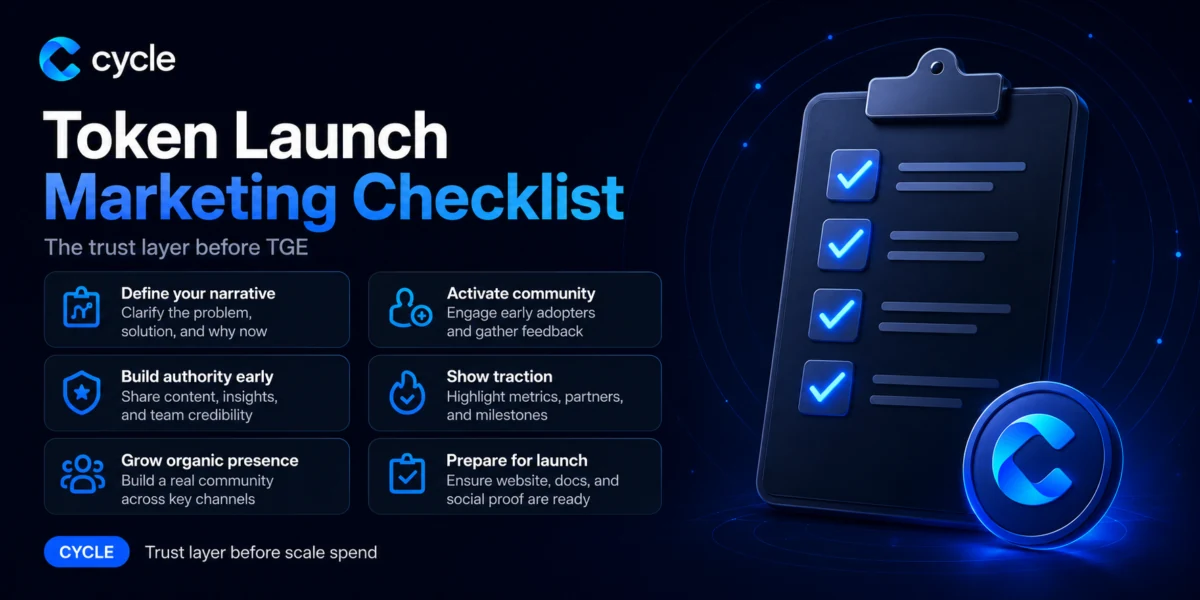
Confirm what can be announced
Create a claims sheet with the proposed wording, its source, the approving owner and the date checked. Separate a plan from a completed event. If access, timing or a partner's involvement is conditional, retain that condition in the announcement itself.
- Does the product description match what is currently available?
- Are dates confirmed by the person responsible for the release?
- Does each partner reference describe the actual agreed role?
- Can the team substantiate any result, user count or quotation it wants to publish?
- Are unresolved decisions marked as unresolved?
The evidence worksheet provides a format for these checks. Avoid turning another project's schedule or a generic template into a factual deadline for your launch.
Test the public destinations
Start with the links a newcomer will actually see: the launch post, X bio, pinned community message, website and documentation. Open them outside a team session and on a phone. Make sure readers can find the relevant information before asking them to take a further action.
| Item | Evidence of readiness | Owner |
|---|---|---|
| Product explanation | Current wording and a working resource. | Product lead. |
| Official links | A checked list used consistently across announcements. | Website or channel owner. |
| Partner statements | Approved wording and permission to name the relationship. | Partnership owner. |
| Community answers | Approved FAQ and an escalation route for unknowns. | Community lead. |
| Campaign handoff | Brief, source links and a checked destination. | Campaign owner. |
| Corrections | A named decision-maker and a list of places to update. | Launch coordinator. |
Prepare the conversation around the announcement
Use the social media plan for the X profile, content calendar and measurement. A partner AMA needs its own purpose, host and follow-up; the AMA checklist covers that preparation.
Keep participation authentic. X's rules on authenticity prohibit artificially inflating activity. Do not use purchased replies, fabricated attendees or implied endorsements to fill a gap in public evidence.
Keep readiness and scheduling separate
This page owns the final communication checklist. The existing TGE marketing planning article offers a scheduling structure; use its timeboxes as an editorial example, not a minimum preparation period or a service promise. Adjust the schedule to the work that remains.
The Trust Before TGE discussion provides broader context about public claims. Neither supporting article replaces confirmation from the team responsible for the launch. For the route from a partner's post to your destination, use the campaign handoff checklist.
Make the release decision explicit
Record which announcement can go out, which statement needs correction and which item is waiting for approval. A checked box means the specified communication check passed; it is not a prediction of demand or token performance.
CYCLE can discuss the X, engagement, partnership and AMA work that belongs in pre-marketing. See Social Proof & Partnership for the scope and contact route. This guide contains no claimed client result.